Wednesday, 27 August 2025

Improving Mobility and Hearing in Parkinsonism with OPA1 Mutation: A TCM Case Update (Part II)


Kit Li


Three months ago, I received a female patient referred by Dr. TJ Wang, a brain acupuncture expert in the UK. [For more details, please refer to my earlier blog: A Case Study of Parkinsonism with OPA1 Mutation Treated with Acupuncture: A TCM Approach to Neurodegeneration (Part I).]

In early June, Miss E, a 54-year-old woman diagnosed with Parkinsonism associated with an OPA1 gene mutation (1) sought Brain Acupuncture treatment with me. This is not a common presentation, and typically the prognosis is quite challenging. Over the past three months, she has received twelve sessions of brain acupuncture combined with Chinese herbal medicine.

An assessment was conducted at her 10th session, approximately two weeks ago.

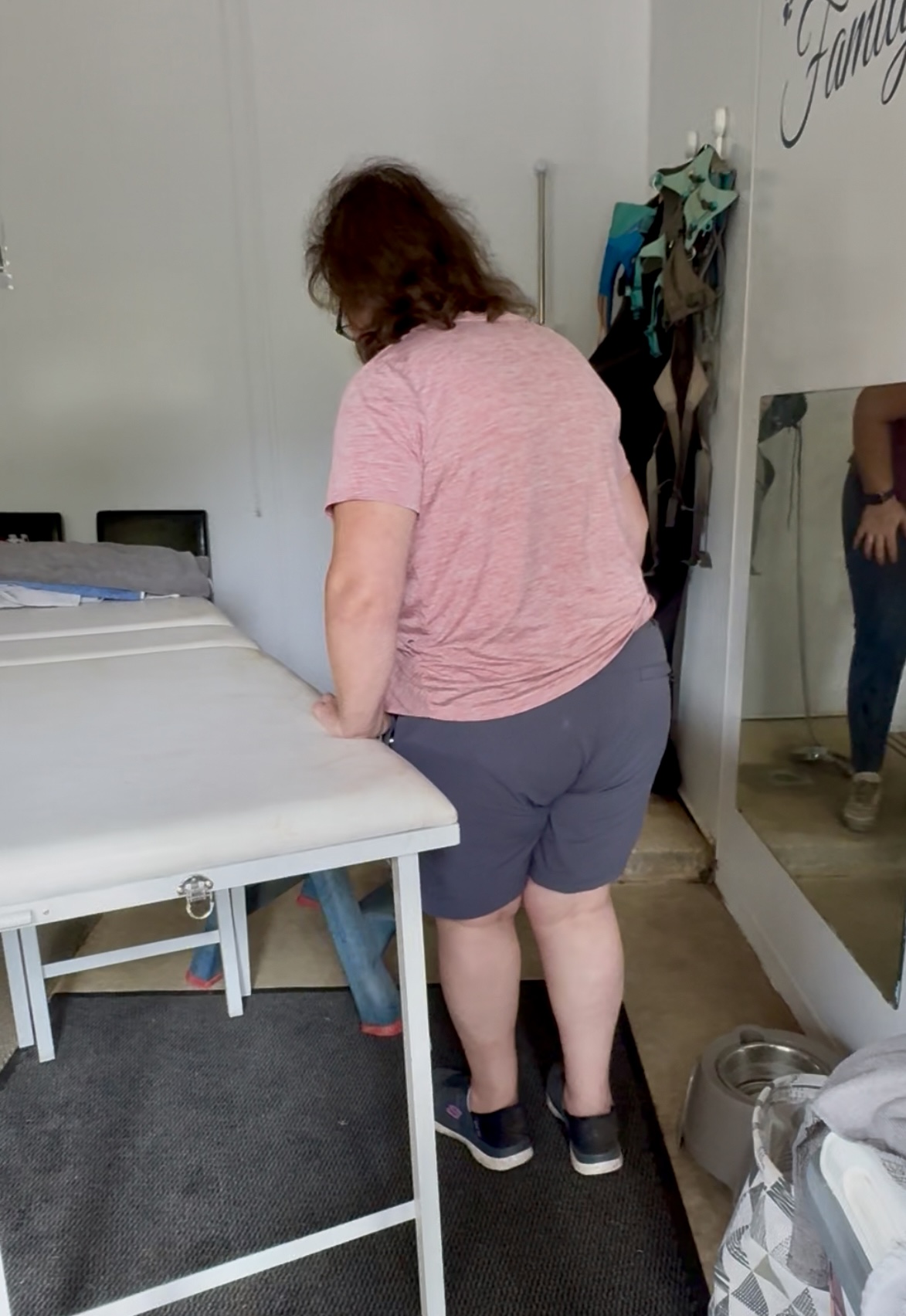
1) Mobility – 10% improvement

  1. Gait steadier with walking stick
  2. Greater independence (able to climb onto the massage bed unaided)

2) Hearing – 20% improvement

  1. Tinnitus (right ear) markedly reduced
  2. Improvement appears linked to both neurological regulation and menopausal balance

For the past six weeks, she has been prescribed two modified herbal formulas, Modified Bu Yang Huan Wu Tang (加减补阳还五汤) (2) and Modified Geng Nian Kang (加减更年康) (3). Since beginning this regimen, her general vitality has improved, Qi and Blood have been strengthened, and overall systemic resilience is better. The combined approach of brain acupuncture and Chinese herbal medicine appears to provide not only symptomatic relief but also functional improvement in independence and quality of life.

  1. Modified Bu Yang Huan Wu Tang (加减补阳还五汤): Tonifies Qi, invigorates Blood, unblocks channels, and addresses neurological and circulatory deficits. Traditionally used post-stroke, here adapted for neurodegeneration.
  2. Modified Geng Nian Kang (加减更年康): Regulates Yin/Yang during menopause, calms Shen, harmonizes Liver and Kidney, and stabilises the menopausal/endocrine aspect. This support often overlaps with mood, sleep, and systemic resilience.

Together, this combination strengthens both the “Root” (Qi, Blood, Kidney essence) and the “Branch” (Parkinsonian symptoms, tinnitus, gait).

Next Steps:

  1. Continue the current dual-formula approach.
  2. Address residual symptoms: muscle rigidity in the anterior thighs and persistent tremors require formula fine-tuning.
  3. Monitor evolving patterns: including sleep quality (insomnia/dream-disturbance common in Parkinsonism), mood regulation (irritability, anxiety, depression linked with both Parkinsonism and menopause), and autonomic function (bowel, bladder, sweating).
  4. Maintain close collaboration with her biomedical team (neurologist, GP) to ensure integrative outcome tracking and support.

References:

1) Syndromic parkinsonism and dementia associated with OPA1 missense mutations

https://pubmed.ncbi.nlm.nih.gov/25820230/

 Optic atrophy and parkinsonism in a family associated with OPA1 mutation

https://www.mdsabstracts.org/abstract/optic-atrophy-and-parkinsonism-in-a-family-associated-with-opa1-mutation/

2) Bu Yang Hua Wu (补阳还五汤): the classical formula name (by Qing dynasty physician Wang Qing-Ren), literally “Tonify the Yang to Restore the Five [Organs/Limbs] Decoction,” mainly for post-stroke hemiplegia due to Qi deficiency and blood stasis. 

https://www.researchgate.net/publication/377147491_Therapeutic_effects_of_Buyang_Huanwu_Tang_combined_with_RT-PA_intravenous_thrombolysis_on_stroke_of_Qi_deficiency_and_blood_stasis_type_and_its_impact_on_Keap1-Nrf2ARE_pathway_antioxidant_stress

https://www.sciencedirect.com/science/article/abs/pii/S0944711322003919

https://pubmed.ncbi.nlm.nih.gov/40972726/#:~:text=Abstract,underlying%20molecular%20mechanisms%20remain%20unclear.

3) Modified Geng Nian Kang (更年康) has 10 ingredients:

Shudihuang (Radix Rehmanniae Preparata): nourishing yin and blood

ShanYao (Chinese Yam): tonifies qi in Lung and Spleen

Zhimu (Anemarrhena asphodeloides Bunge): expels heat

Danggui (Chinese Angelica Root): nourishing blood...etc

Sunday, 24 August 2025

Milestones and Gratitude: My Acupuncture Journey


Kit Li 


The year 2025 marks a turning point in my life.

I have diligently earned two diplomas: one as a qualified acupuncturist at the London Academy of Chinese Acupuncture (LACA), and another as a Brain Acupuncturist at the Academy of Scalp Acupuncture (ASA). These achievements represent a milestone in my career within the world of Traditional Chinese Medicine (TCM).

I am truly grateful to have graduated from both LACA and ASA, where I had the privilege of being taught by an elite team of TCM professors. Over the past two years, they have mentored, supported, and encouraged me, helping me complete a three-year acupuncture diploma in just two intensive years. The journey was not easy. There were moments of challenge and self-doubt, yet looking back, every effort was worthwhile. I am deeply proud of myself for this achievement.

During these years, I was also honoured to serve as a monitor and as student clinic manager, supporting my peers and learning alongside them as though we were a family. I was fortunate, too, to be a student member of CAHMA, SAS, and CMA, which gave me further opportunities to broaden my understanding of TCM.

I still vividly remember my very first independent treatment at the student clinic. It was for a female patient, under the supervision of one of our professors. I was nervous and anxious at the time, but today, I feel far more confident. In fact, I am now treating patients with positive outcomes and have begun volunteering as a neuro-acupuncturist at South Bucks Hospice, supporting patients with cancer and neurological conditions. This opportunity, one I had long hoped for, allows me to give back to the community and apply my skills in a meaningful way.

Once again, I would like to express my heartfelt gratitude to my professors and to my team. I know there is still a long road ahead before I can become the best TCM practitioner I aspire to be. Yet I embrace this lifelong journey of learning wholeheartedly, with passion and dedication.

Saturday, 16 August 2025

Lìqiū (立秋): Nourishing Soup for the Transition into Autumn

Kit LI


Did you know the first solar term of autumn quietly arrived a week ago?   Start of Autumn (Liqiu) (1) is the 13th of the 24 solar terms in the Chinese Lunar Calendar.  It marks the end of the hot summer season and the beginning of autumn.  Although the weather may still be quite hot during this period. the overall trend is a gradual shift towards cooler temperatures.

Liqiu represents the shift from the scorching Summer to the cooler Autumn.  It is a turning point where Yang energy begins to recede, Yin energy starts to grow, and the climate changes from Yang-dominant to Yin-dominant.  

The period after Liqiu can still be very hot, a phenomenon known as the 'Autumn Tiger' referring to a short spell of intense heat after the start of Autumn.  Nevertheless, temperatures gradually trend downward, rainfall and humidity gradually decrease, the weather becomes drier, and the temperature difference between day and night increases.

When people ask me about recipes or herbs for this seasonal change, I often recommend dietary therapy as a complementary approach.   One nourishing soup, which benefits healthy by Regulating the Qi, Strengthening the Spleen, Resolving Dampness and Nourishing Lungs:


Ingredients (for four people): 

Wǔ Zhǐ Máo Táo (五指毛桃, Ficus hirta) - 40g   
Yù Zhú (玉竹, Polygonatum odoratum) - 20g
Bǎi Hé (百合, Lilium spp.) - 20g
Fú Líng (茯苓, Poria cocos) - 20g
Yì Mǐ (薏米, Coix lacryma-jobi) - 20g
Raw Cashew Nuts - 30g
Water - 1.5L

If you have a nut allergy, you can cook this soup with lean pork instead.

Put the above ingredients in a pressure cooker, and put Soup setting for 30 minutes, then ready to drink.


Herbal Functions:

Wǔ Zhǐ Máo Táo (五指毛桃, Ficus hirta) (2), it helps strengthen the Spleen and Lungs, promoting the circulation of Qi, boosting energy, removing dampness from the body, and relieving muscle and joint pain.  It may also be used as a supportive, complementary therapy for chronic hepatitis and fluid retention associated with  liver cirrhosis.

Yù Zhú (玉竹, Polygonatum odoratum), it nourishes yin, moistens dryness, eases cough and thirst, and nourishes Lungs.

Bǎi Hé (百合, Lilium spp.), it moistens the lungs, clears Heart-Fire and calms the spirit, helps with restlessness or dry cough.

Fú Líng (茯苓, Poria cocos) (3), it strengthens the spleen, drains dampness from the Lower Jiao, and supports mental calmness.

Yì Mǐ  (薏米, Coix lacryma-jobi), it strengthens spleen, reduces swelling and dampness, supports joints and relieve pain.


Additional notes:

1) Suitable as a tonic soup for elderly, convalescent, or weak individuals.
2) Can be combined with other herbs depending on individual TCM diagnosis.
3) Not suitable for severe diarrhoea from cold-damp, or for people with extreme yang deficiency, unless modified.


As the season quietly shifts from the heat of Summer to the cool embrace of Autumn, taking care of your body with gently, nourishing foods can help you adapt to the changing climate, strengthen your Qi, and support overall wellness.  A simple soup like this not only warms and balances the body, but also brings a sense of comfort and harmony as nature transitions around us.

Embrace the rhythm of the seasons, and let your diet be a support companion for Health and Vitality.


References:


2) Effects of Ficus hirta Vahl. (Wuzhimaotao) extracts on growth inhibition of HeLa cells: https://www.researchgate.net/publication/50850281_Effects_of_Ficus_hirta_Vahl_Wuzhimaotao_extracts_on_growth_inhibition_of_HeLa_cells


3) Chemical constituents and pharmacological properties of Poria cocoshttps://pubmed.ncbi.nlm.nih.gov/21347995/


Friday, 15 August 2025

TCM Post-Stroke Recovery with Scalp Acupuncture and Herbal Therapy

Kit Li


An eighty year-old male patient experienced an ischemic stroke (1) one month ago.  Prior to the stroke, he suffered from a severe chest infection that did not fully resolve.

He has a long-standing history of high blood pressure, high cholesterol, and chronic kidney disease for over 40 years, with frequent symptoms including nocturia and lower-limb oedema.

From a TCM perspective, aging and kidney yang deficiency, combined with qi and blood stagnation, may contribute to the accumulation of phlegm and dampness.

Fortunately, his post-stroke symptoms are limited to memory impairment and mild slurred speech, with no mobility issues.

On the 4th of August, he received his third scalp acupuncture (2) treatment, with Dao-qi technique, also electro-acupuncture (3) applied to several key areas, including the FSA, CA, and selected body points on Du-mai and Ren-mai.  

I prescribed Bi Min Gan (鼻敏感) (4), a classical formula that expels Wind and relieves nasal congestion to address the patient’s severe seasonal allergic rhinitis.  Its main ingredients include Jing Jie (荆芥, Schizonepeta stem or bud) (5), Fang Feng (防风, Saposhnikovia root), Bai Zhi (白芷, Dahurian angelica root), and Gan Cao (甘草, Licorice root), among others. After one week of herbal therapy, signs of dampness and heat were significantly reduced, as shown in the above photos.

On the 11th of August, I selected a modified Jade Screen + (Yu Ping Feng San, 加味玉屏风散) (6) formula, a renowned formula for boosting immune function and strengthening Defensive-Qi, making it an effective preventive remedy for those with recurring hay fever.  The modifications were tailored to strengthen both Qi and Blood. Clinical observation confirmed this effect: the tongue surface became smooth, and the curved cracks previously visible had disappeared. These changes indicate that the Spleen function was successfully tonified and Qi and Blood replenished.  See the below photo.


References:

1) An ischemic stroke happens when blood flow to part of the brain is blocked, usually by a blood clot or a build-up of fatty deposits in the blood vessels. Without oxygen and nutrients, brain cells start to die within minutes.

2) Efficacy and safety of scalp acupuncture in improving neurological dysfunction after ischemicstroke: https://pmc.ncbi.nlm.nih.gov/articles/PMC7447452/


3) Early intervention with electrical stimulation reduces neural damage after stroke in non-human primates: https://www.nature.com/articles/s41467-025-61948-y

4) Bi Min Gan (鼻敏感): to treat wind-cold and wind-heat syndromes, expels dampness, reduces inflammation, clears nasal problem and discharge, and relieve superficies.

5) Jing Jie and Fang Feng: https://pubmed.ncbi.nlm.nih.gov/37315642/

6) Yu Ping Feng San (玉屏风散) is considered the best immune tonic herb in stabilizing and strengthening the protective “Qi”.

Yu Ping Feng San, an Ancient Chinese Herbal Decoction Containing Astragali Radix, Atractylodis Macrocephalae Rhizoma and Saposhnikoviae Radix, Regulates the Release of Cytokines in Murine Macrophages - PMC


Nourishing the Body During The Major Snow (Dàxuě): Warming Foods for the Deep Winter Season

Kit Li Today, December 7th, marks Dàxuě (1) in the Chinese lunar calendar - the Major Snow (Dàxuě) solar term. The Major Snow solar term mar...